Undergraduate Research Offers Pathways to Academia, Opens to External Students
The TECS Research Experience for Undergraduates (REU) provides invaluable experience for students interested in research, and has offered opportunity to non-Wilson College students for the first time.
For students in STEM disciplines, engaging in research is an integral part of shaping their career and academic paths. The Research Experience for Undergraduates (REU) at the Wilson College of Textiles allows its students to jumpstart their contributions to the field as early as their first summer at NC State.
Spanning from late May to just before the fall semester, REU employs students for a 10-week period, during which they contribute to an active research project alongside professional researchers and participate in workshops and social events promoting career growth.
Excitingly, the college has established an NSF Research Experiences for Undergraduates Site, providing, for the first time, a dedicated funding mechanism to support cohorts of undergraduate researchers from outside the Department of Textile Engineering, Chemistry and Science. Seven students from schools across the country were accepted into the program to benefit from the unique facilities and expertise at the Wilson College.
“Ideally, we want students to get the entire research process and experience.” -Tova Williams, REU Co-Director
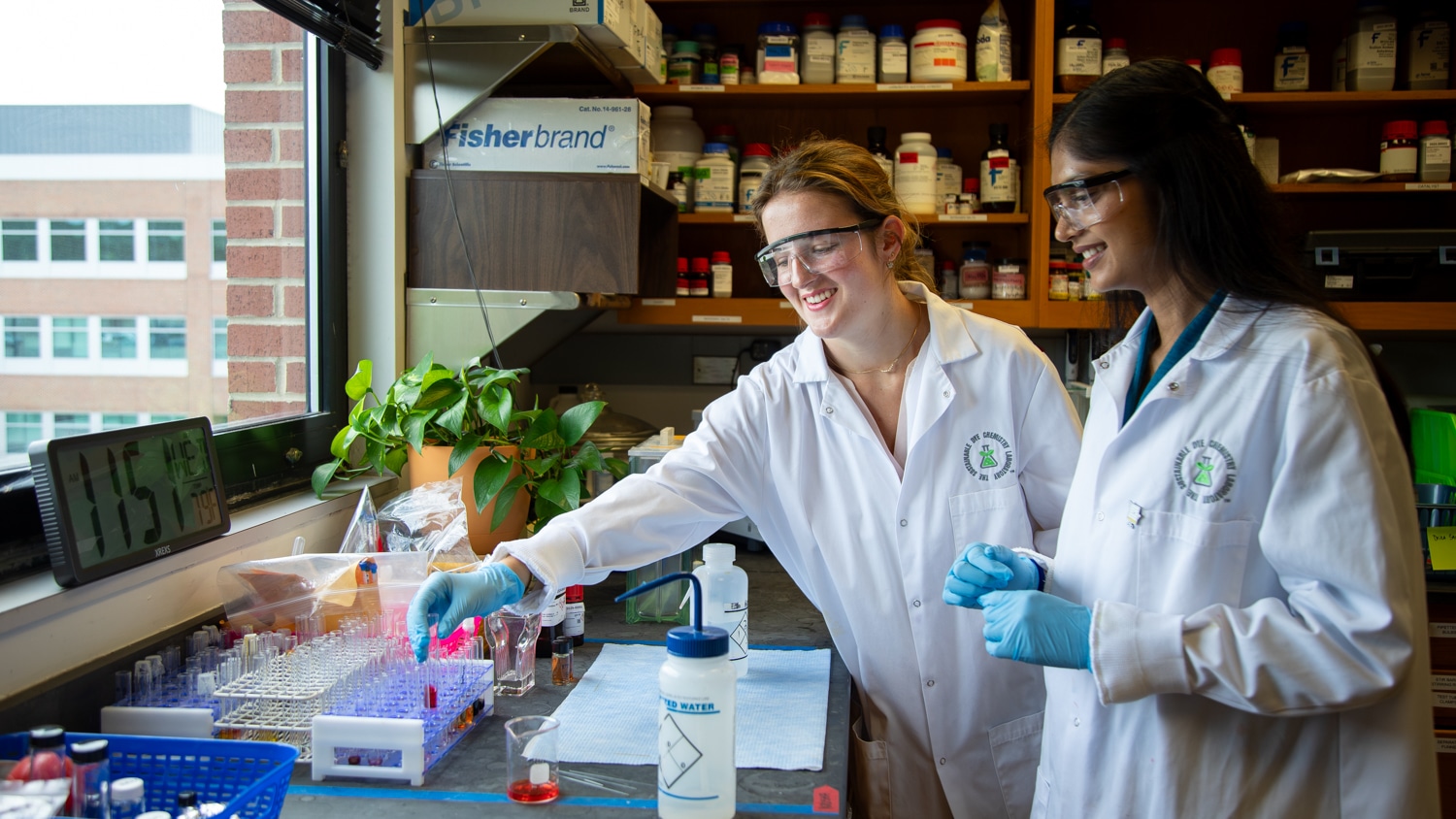
Assistant Professor and REU Co-Director Tova Williams Cherry is the principal investigator of the Sustainable Dye Chemistry Laboratory, one of the many research spaces that employs REU students every summer.
“We’re really trying to give students an opportunity to do research early on. We have several students who just completed their first year, and they’re doing research in the lab,” Williams Cherry says. “I know when I was a student, I didn’t get to research until my senior year.”
As the REU program continues to broaden and diversify, it benefits the undergraduate students, graduate researchers and faculty who are pushing their fields towards sustainable solutions and innovative technology.
From students to researchers
When initially applying for the program, potential REU participants are asked about their areas of interest and aspirations. From there, they are paired with a faculty member, a corresponding laboratory and a research project.
Though all under the REU umbrella, the labs that compose the program are diverse in subject areas. The research opportunities include ongoing research led by faculty, postdoctoral researchers or graduate students, as well as industry-focused testing. Each research group provides a unique experience for the student and requires them to assist the lab with a range of needs.
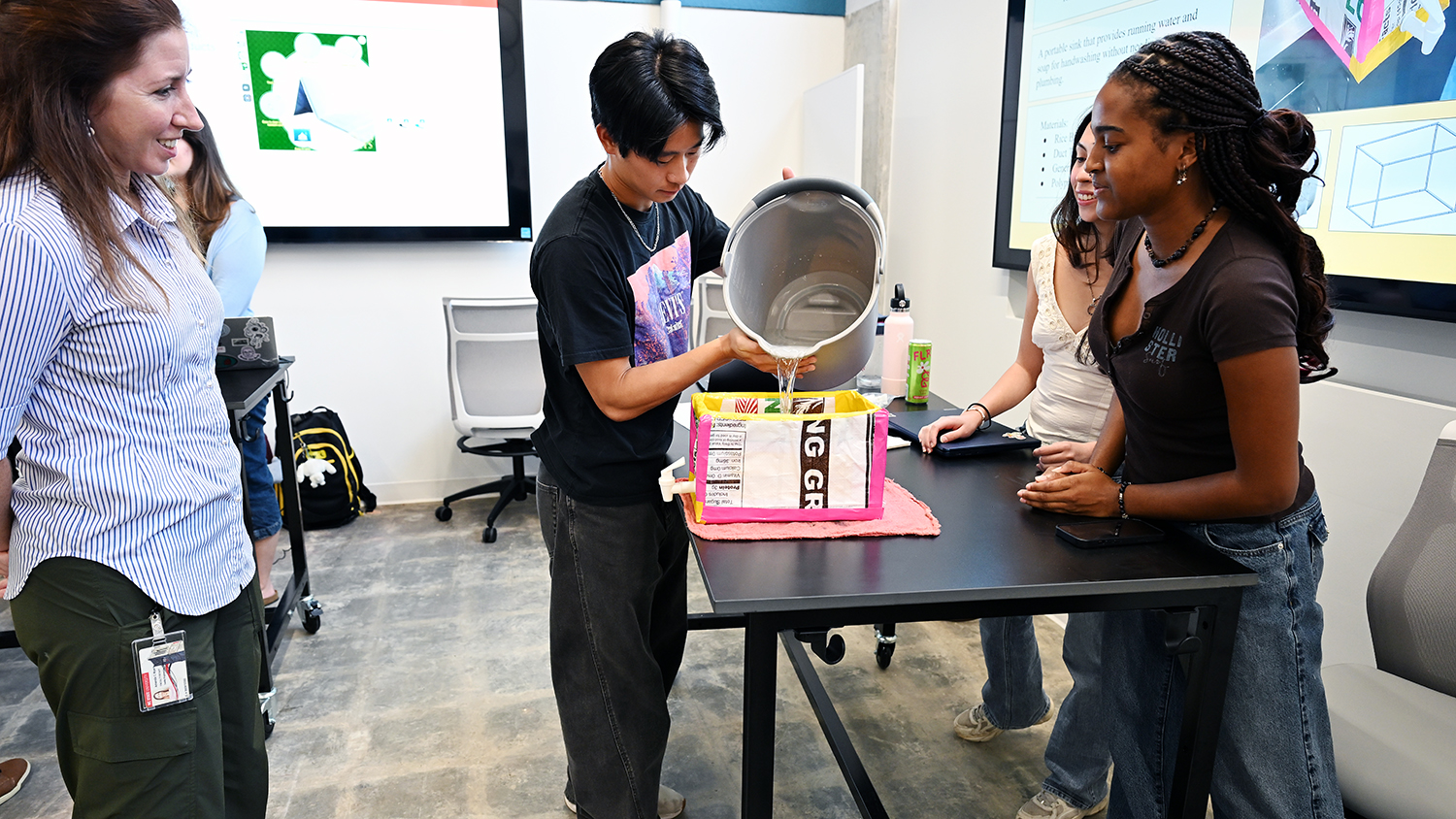
Assistant Professor and REU Co-Director Amanda Mills runs the Smart Holistically Integrated and Functional Textiles (SHIFT) Research Group and has one REU student working under her, as well as several graduate students. While her project involves product fabrication and testing, others may require more chemistry knowledge or involve more data analysis.
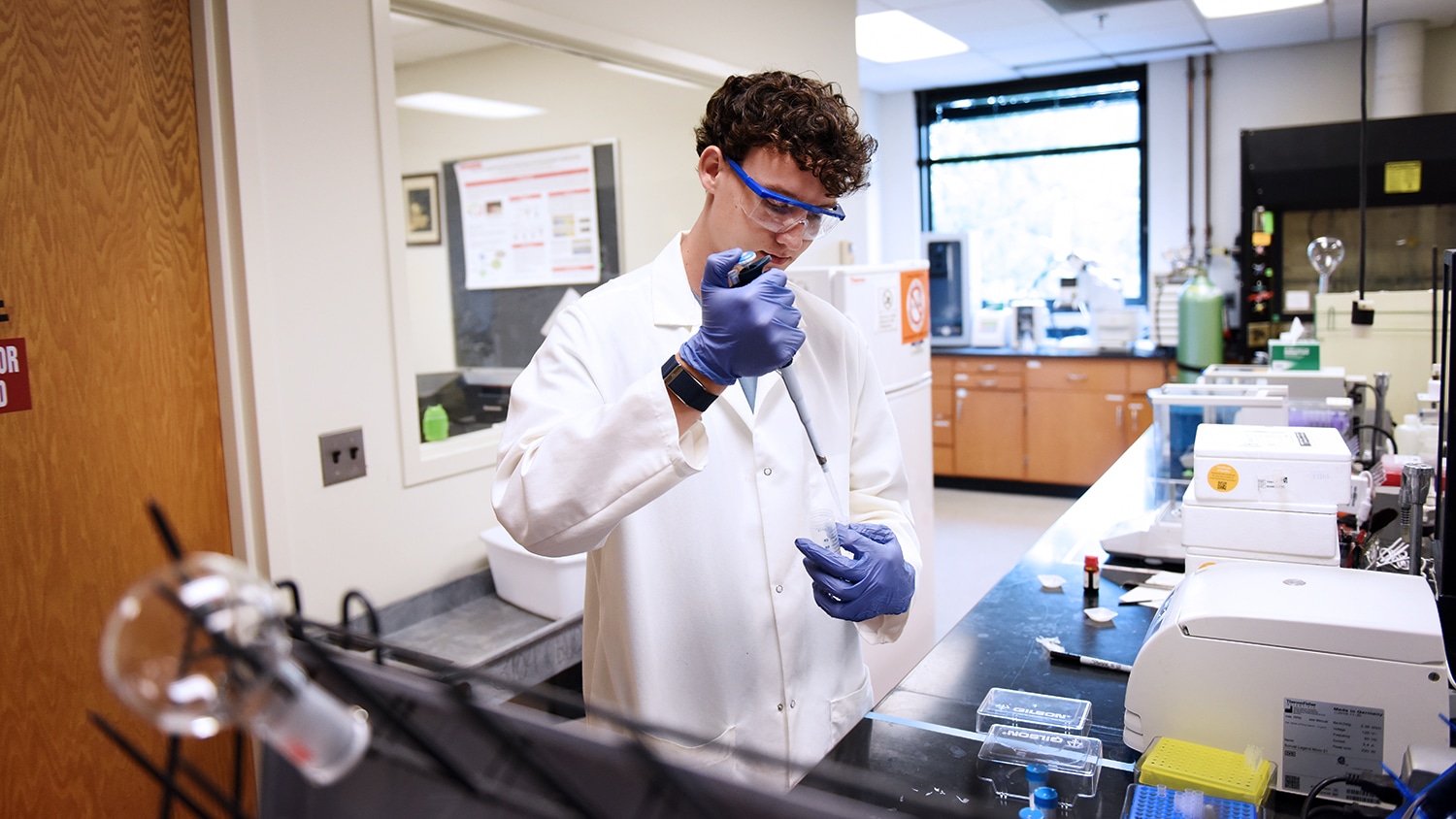
“It’s all going to be lab dependent. Some students do experiments, some students are doing solely computer-based work, some are actually in a lab mixing up chemicals, et cetera,” Mills says. “Some students are going to be working on industry sponsored work and multiple projects at a time.”
Though every REU experience is different, the program is designed to give each student a broad overview of research processes — turning the vague prospect of research into something tangible.
“Ideally, we want students to get the entire research process and experience, from doing background research and literature searches, to talking with their mentor or graduate student about designing an experiment,” Williams Cherry says.
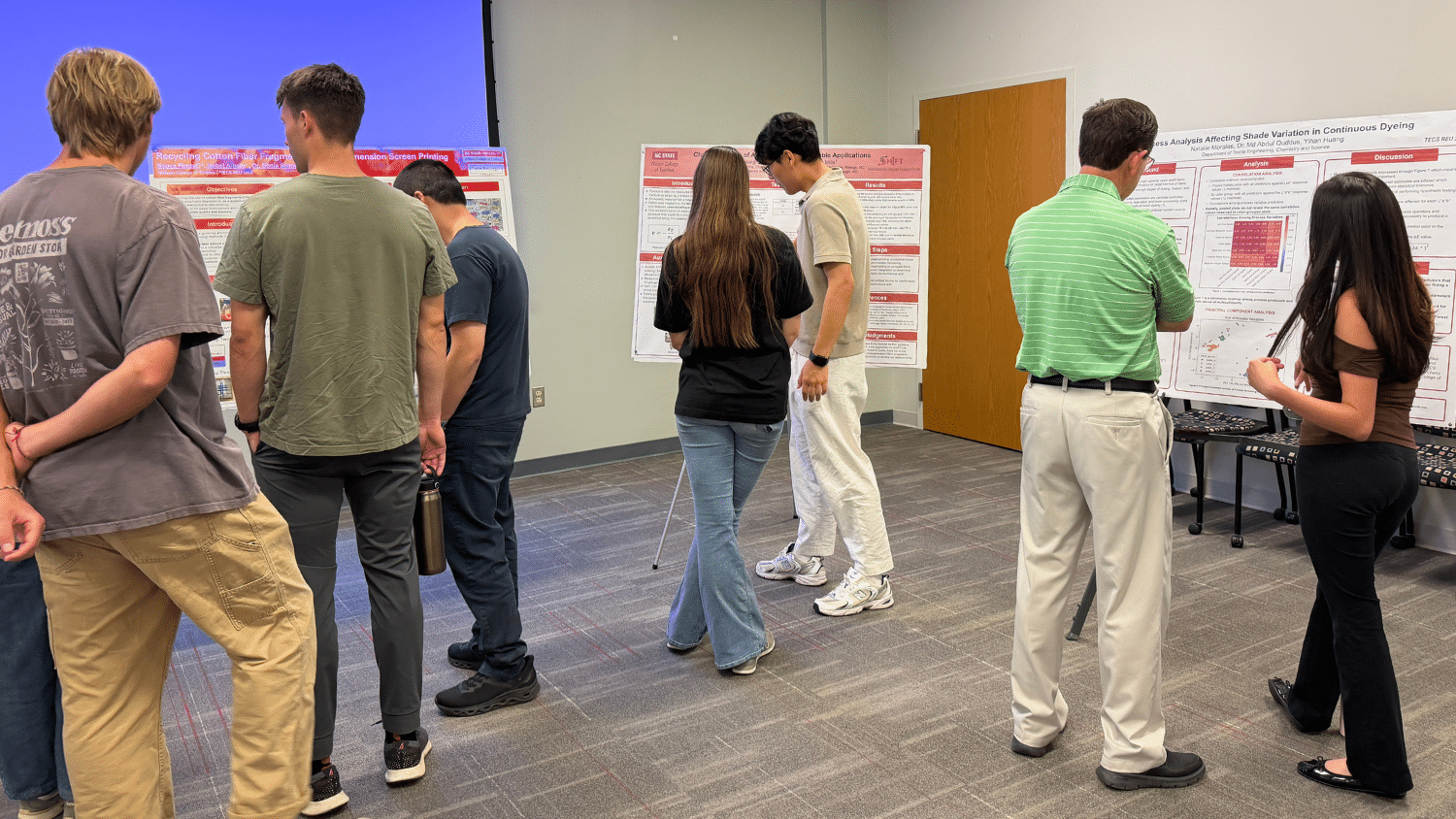
In this way, REU is the rising tide that uplifts everyone in the Wilson College. Undergraduates gain invaluable experience for their resume and personal exploration; researchers gain extra hands and teaching experience; and faculty get an early shot at forming relationships with passionate students who may continue into graduate school.
“This gives students an opportunity to work in a lab setting really early on, and to help them realize that graduate school can be a possibility for them if they’re interested,” Mills says.
Opening up the program
REU began under the leadership of Amanda Mills and Associate Dean Jeff Joines, both faculty members and researchers in TECS. Thanks to internal funding, the program evolved to include all disciplines in TECS over its first few years. After rigorous efforts from the leadership team, a grant from the NSF was secured, allowing the program to open applications to external students.
Access to the Wilson College’s faculty and facilities is no small thing. The external program received about 160 applications from students vying for a chance to gain experience in the niche of textiles.
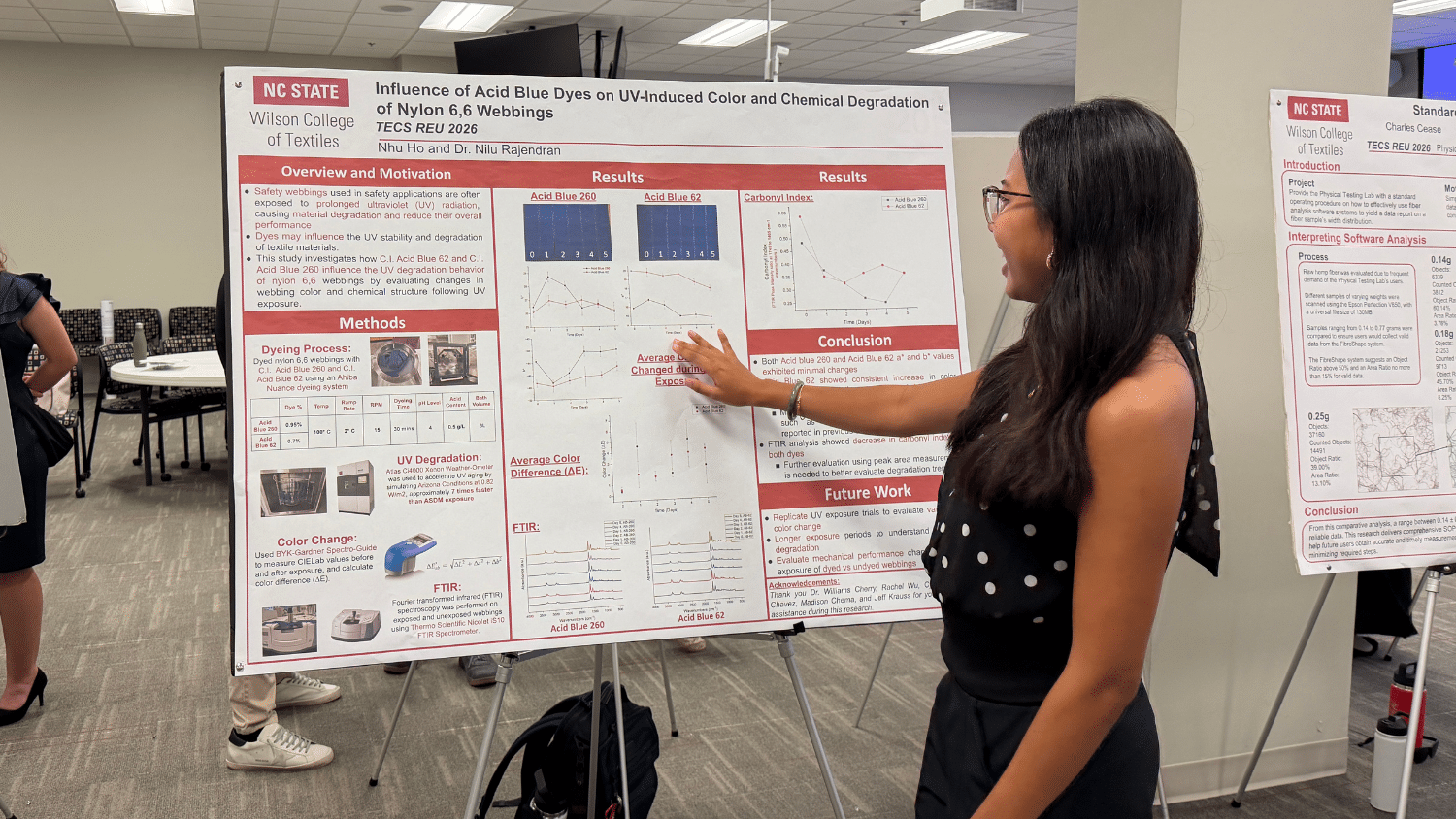
Regan Stefanoni was one of seven students selected from the applicant pool to participate in TECS REU. A chemistry student at Winona State University in Minnesota, Stefanoni was interested by the unique textile chemistry program and the ample resources at NC State.
“When I was writing my application essay, I talked about how I go to a small school and the lack of opportunity, but I didn’t realize how true that was until I came here and saw all of their labs,” Stefanoni says. “It’s massive.”
Stefanoni worked for 10 weeks in Williams Cherry’s polymer and color chemistry lab. At first, her everyday work involved computational chemistry, and during experimentation in later weeks, she primarily assisted Fiber and Polymer Science Ph.D. student Krusha Patel. She says the intensive time commitment has allowed her to immerse herself in the project without the typical distractions of the school year.
“Since coming here, where I’ve been really involved in the whole process, I have felt that graduate school is something I’m more interested in and genuinely want to apply to,” Stefanoni says. “I’ve really liked this experience because the connections between research and industry are clear here. It makes me feel like I could go in either direction and be prepared.”
Beyond research
Some participants are assigned to the Zeis Textiles Extension (ZTE) for their REU, as opposed to a specific research project. As a part of the more industry-facing laboratories, such as the weaving lab or prototype lab, these students get the chance to work on advanced equipment managing projects for real industry partners.
“The ZTE labs are a great way for them to get hands-on experience in operating equipment, whether it’s in the dyeing and finishing lab, the spinning lab, knitting or weaving,” Mills says. “It’s a really valuable experience for them, and it gives them a bit more of a sense of direction as to what aspects of the textile industry they’re really interested in.”
REU not only allows participants to get hands-on experience in TECS laboratories, but it also prepares them for the presentational and academic aspects of research.
“Research is not just doing experiments in the lab. We show students that through our professional development workshops,” Williams says. “I think that really sets our program apart.”
The workshops span topics from technical skills, like conducting literature reviews and poster making, to industry skills such as interviewing, resume building and using social media as a scientist. They even span the more conceptual issues that come with research, such as internal bias, ethical standards and responsible AI use.
“We try to make sure that we are teaching skills that students can take with them to the future, regardless of if they decide to pursue research or not,” Mills says.
Stefanoni says the workshops helped her boost her confidence and prepare her for the intimidating process of applying to graduate school.
“It’s helped me feel more secure in my abilities and like graduate school is something feasible for me,” Stefanoni says.
In order to support students’ ability to showcase their work, an essential aspect of research, REU requires students to practice their presentations several times throughout the program.
“Speaking in front of people about technical subjects can be terrifying, so this is just an opportunity to desensitize them to it. [Jeff Joines, Tova Williams Cherry and I] give them feedback only to help them improve, and the stakes are very low,” Mills says.
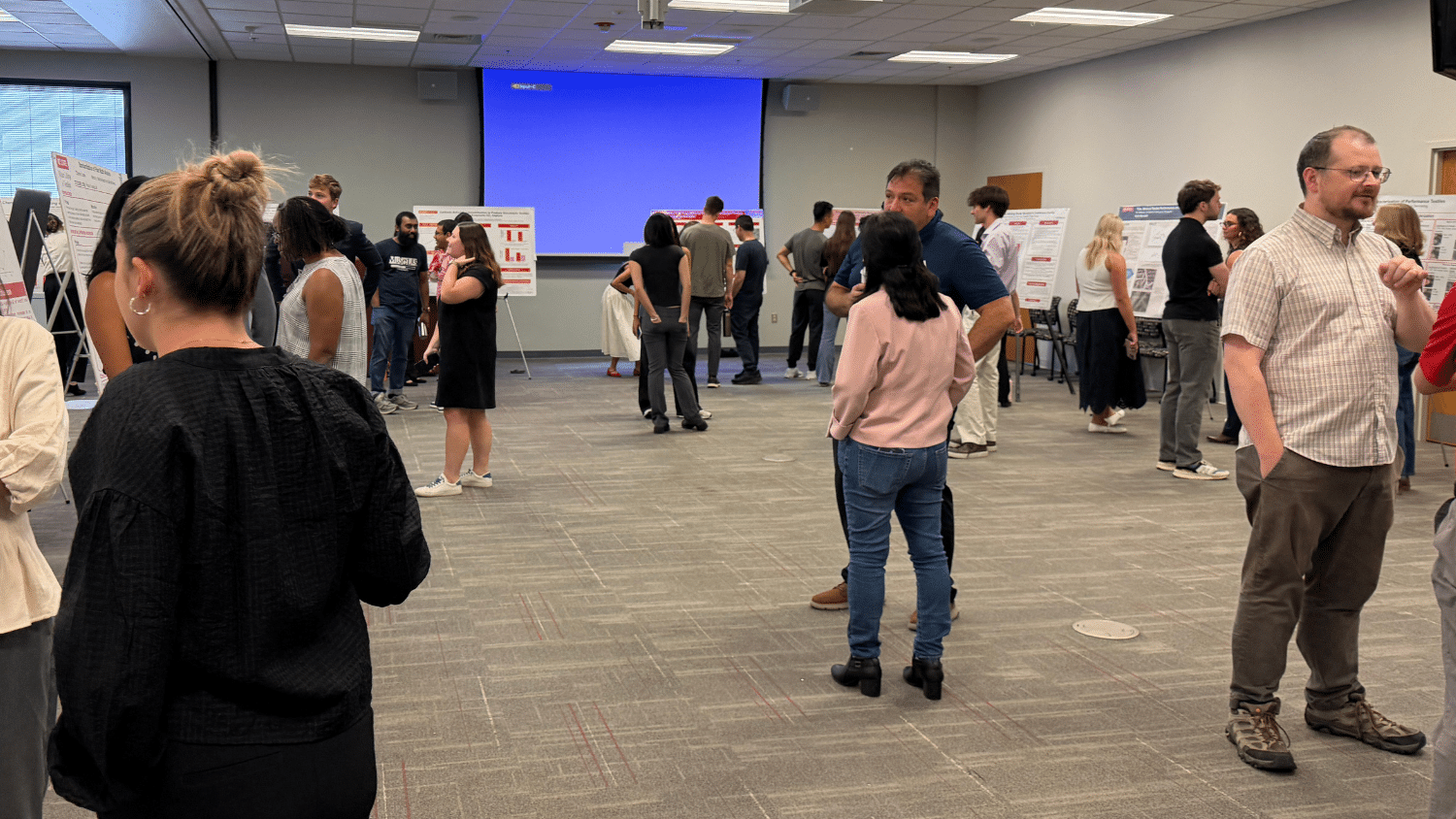
At the end of the program, participants presented at a TECS REU symposium as well as the university-wide summer research poster symposium. The challenge is the conclusion of their 10-week journey, a testament to their work and research contributions, and invaluable practice to prepare them for their bright futures shaping the textiles industry.
- Categories: